Interactive · Code breakers
The Rosetta Stone Decoder
One message, carved three times in three scripts. Crack the names, as Champollion did.
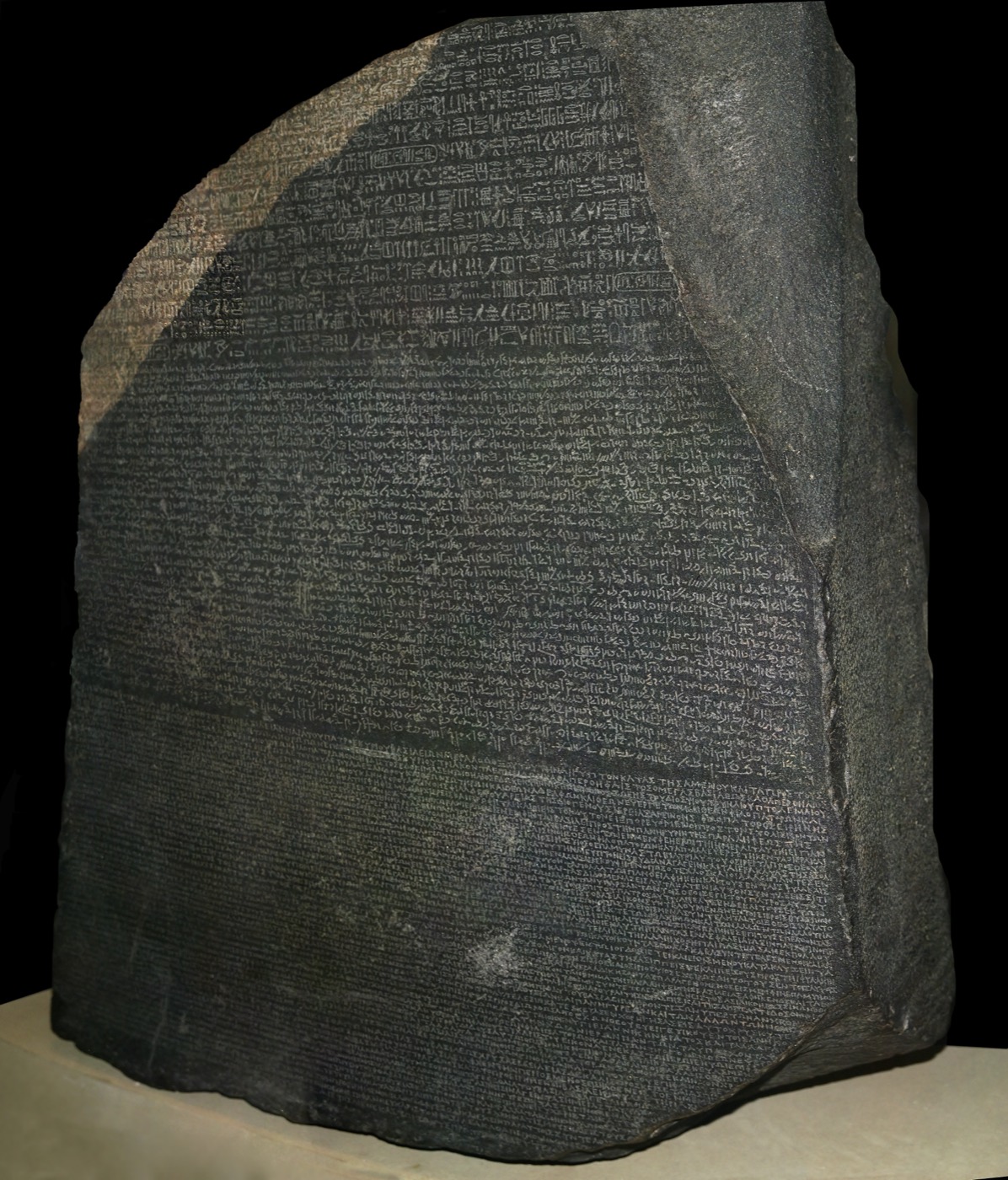
One decree, three scripts
In July 1799, French soldiers rebuilding an old fort at the port city of Rashid found a broken stone carved with three different scripts: hieroglyphic, demotic and Greek. Europeans called Rashid “Rosette”, so the stone took the city’s name. Source: British Museum, “Hieroglyphs: unlocking ancient Egypt” exhibition text
The stone carries one priestly decree, repeated in each script. It was drawn up on 27 March 196 BC by a council of Egyptian priests in Memphis, in the reign of Ptolemy V. Source: British Museum, “Hieroglyphs: unlocking ancient Egypt” exhibition text
Today the Rosetta Stone is in the British Museum, numbered EA24. Source: Egypt Exploration Society, “Try writing your name in hieroglyphs”
Top of the stone
Hieroglyphic
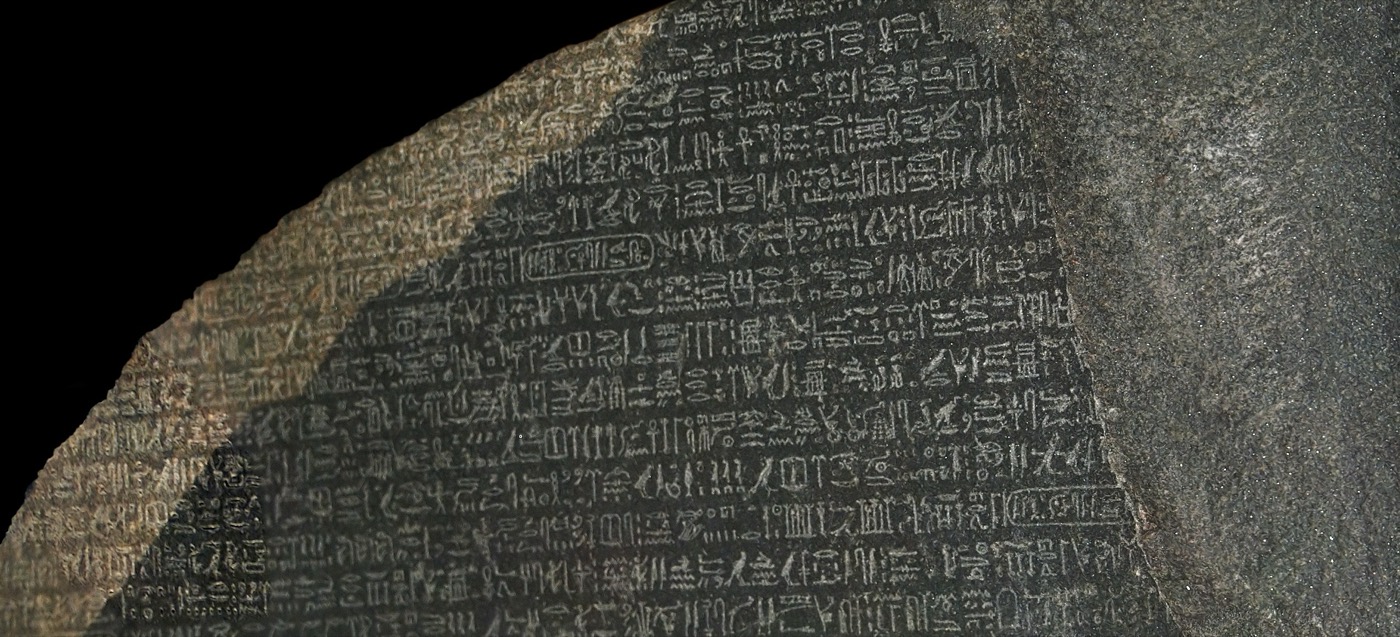
Hieroglyphs are the oldest form of ancient Egyptian writing. They were used on temples, tombs and other monuments. Source: British Museum, “Hieroglyphs: unlocking ancient Egypt” exhibition text
Middle of the stone
Demotic
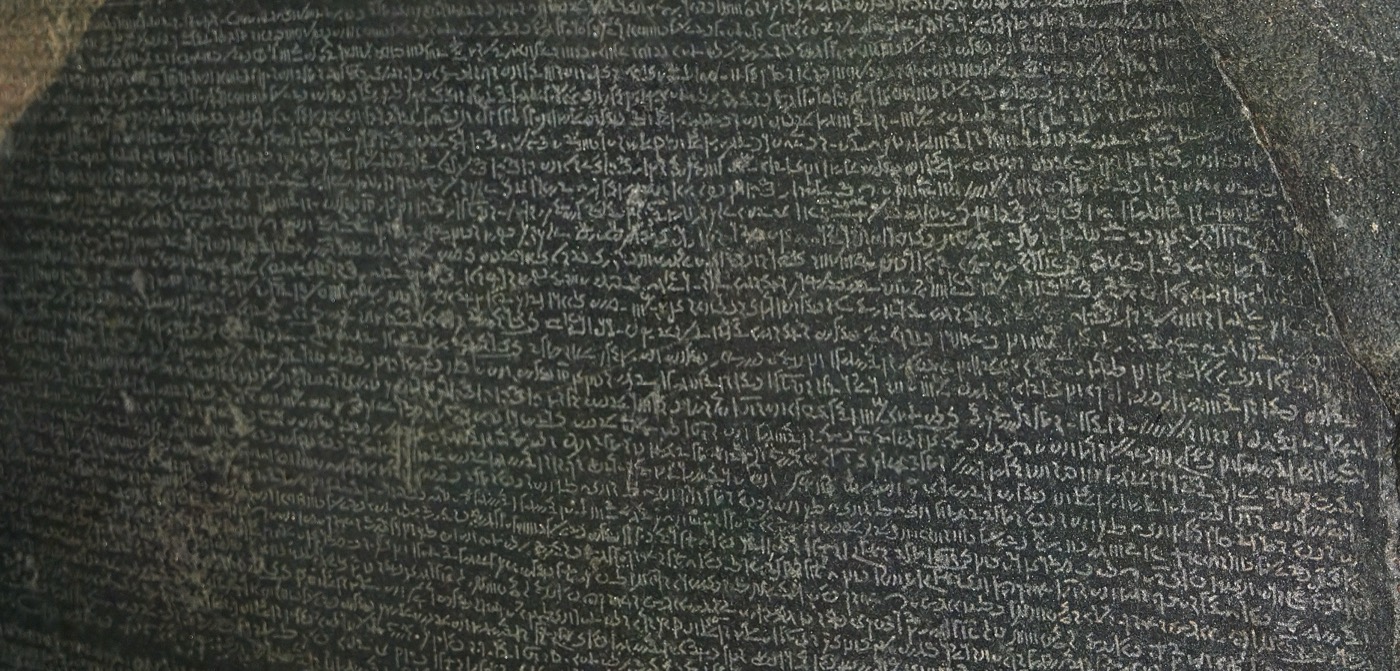
Writing with a brush or reed pen led to quicker, less pictorial scripts, first hieratic and later demotic. These handwritten scripts were used for daily letters and literature, and mostly read from right to left. Source: British Museum, “Hieroglyphs: unlocking ancient Egypt” exhibition text
Bottom of the stone
Greek
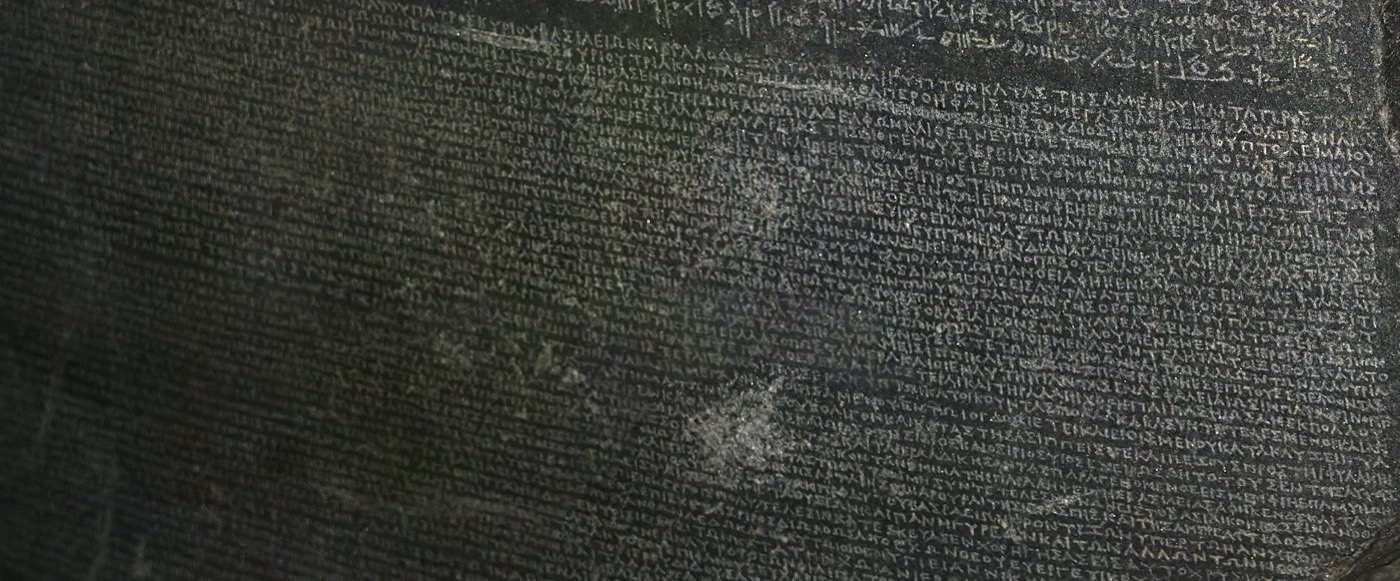
After Alexander the Great conquered Egypt in 332 BC, the use of Greek became widespread. Source: British Museum, “Hieroglyphs: unlocking ancient Egypt” exhibition text
Rosetta Stone photograph by Hans Hillewaert, CC BY-SA 4.0, via Wikimedia Commons; the close-ups are cropped from it. Hieroglyphs set in Noto Sans Egyptian Hieroglyphs (SIL Open Font License).